
Positive Indian Ocean Dipole set to compound El Nino as NOAA confirms strengthening event
NOAA's late-June ENSO update confirms a strengthening El Niño, but the more consequential new development is a positive Indian Ocean Dipole now projected to build alongside it through the second half of 2026.
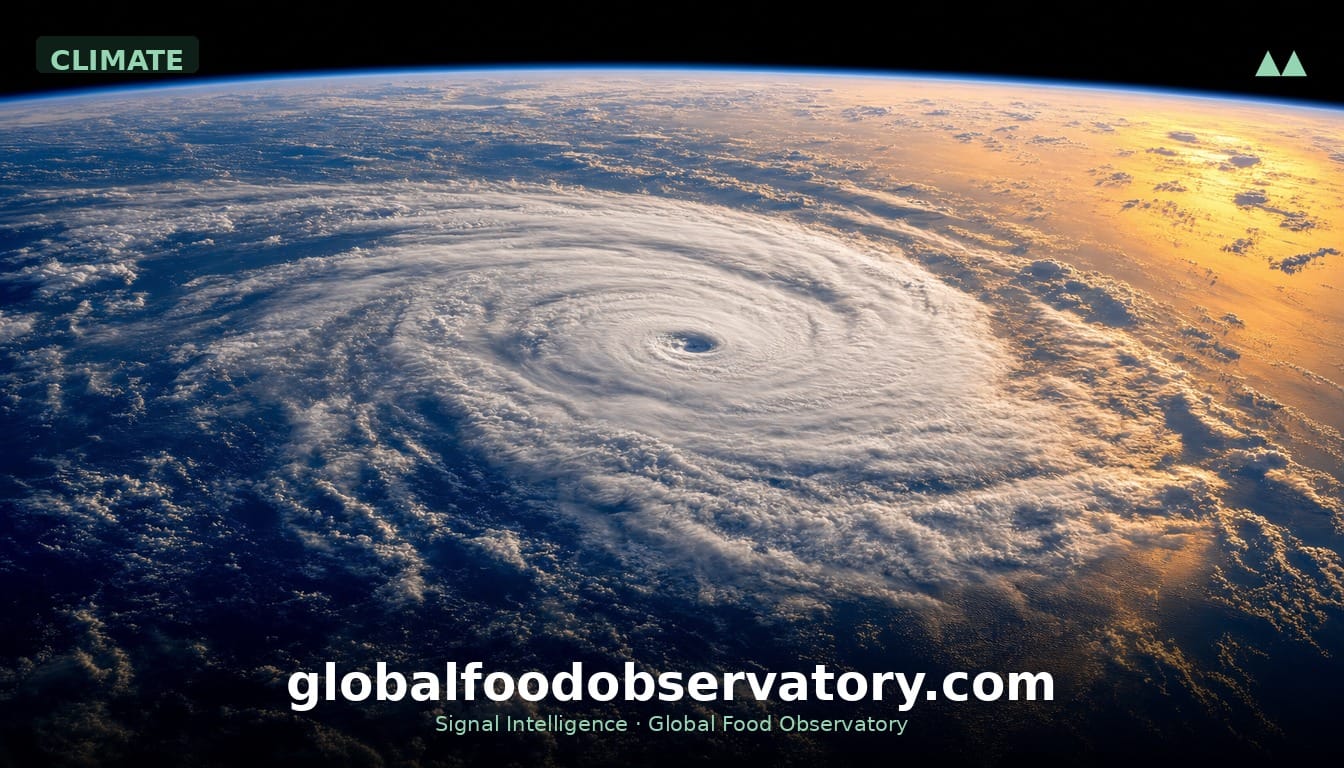
NOAA's Climate Prediction Center confirmed in its 29 June 2026 ENSO diagnostic update that El Niño conditions remain present and are expected to strengthen into the Northern Hemisphere winter of 2026/27, with an El Niño Advisory still in effect. The mid-June 2026 CCSR/IRI model ensemble at Columbia University's International Research Institute for Climate and Society found strong agreement across 24 participating models that El Niño will intensify further, with most dynamical models forecasting Niño 3.4 anomalies exceeding +2.0°C by the July–September period.
The more specific new development is the Indian Ocean Dipole. The same IRI ensemble shows the probability of a positive IOD phase rising from roughly 2% in June to approximately 61% in July, climbing above 90% by September. A positive IOD typically suppresses rainfall over Indonesia and parts of Southeast Asia and East Africa while enhancing rainfall over East Africa's Horn region and parts of India. When it co-occurs with El Niño, the two patterns can reinforce each other's drying effects on Indonesian and Australian agricultural regions specifically.
For GFO readers, this matters less as a repeat of the El Niño-is-strengthening narrative — already flagged in Editions 17 and 18 — and more as a specific compounding risk for Indonesian palm oil production (already under export-channel stress per Signal 5) and Australian winter grain, both of which sit in the geographic overlap zone where El Niño and positive IOD effects reinforce each other.
Implication
Buyers and traders exposed to Indonesian palm oil and Australian winter grains should treat the positive-IOD-plus-El-Niño combination as a distinct and additive risk layer on top of existing El Niño forecasts already priced into the market. Vegetable oil buyers should read this alongside Indonesia's DSI export transition and June's vegetable oil price rally as three reinforcing, rather than independent, pressures on the same commodity complex. Given that IOD forecasts carry meaningfully more uncertainty at longer lead times than ENSO forecasts, exporters should treat the current 61–90%+ probability range as directional rather than confirmed, and revisit as the July and August updates are published.
Decision Pathway
Sources
- NOAA Climate Prediction Center, ENSO Diagnostic Discussion, 29 June 2026
- International Research Institute for Climate and Society (Columbia University), ENSO Quick Look, mid-June 2026
Get AI-powered analysis of this signal — implications, risks, and procurement actions tailored to your exposure.