
H5N1 reaches Australia's mainland as the last free continent falls and poultry trade status goes on the clock
The panzootic strain of avian influenza has established in Australian wildlife for the first time, ending the country's status as the world's last H5 free continent even as poultry and trade remain, for now, untouched.
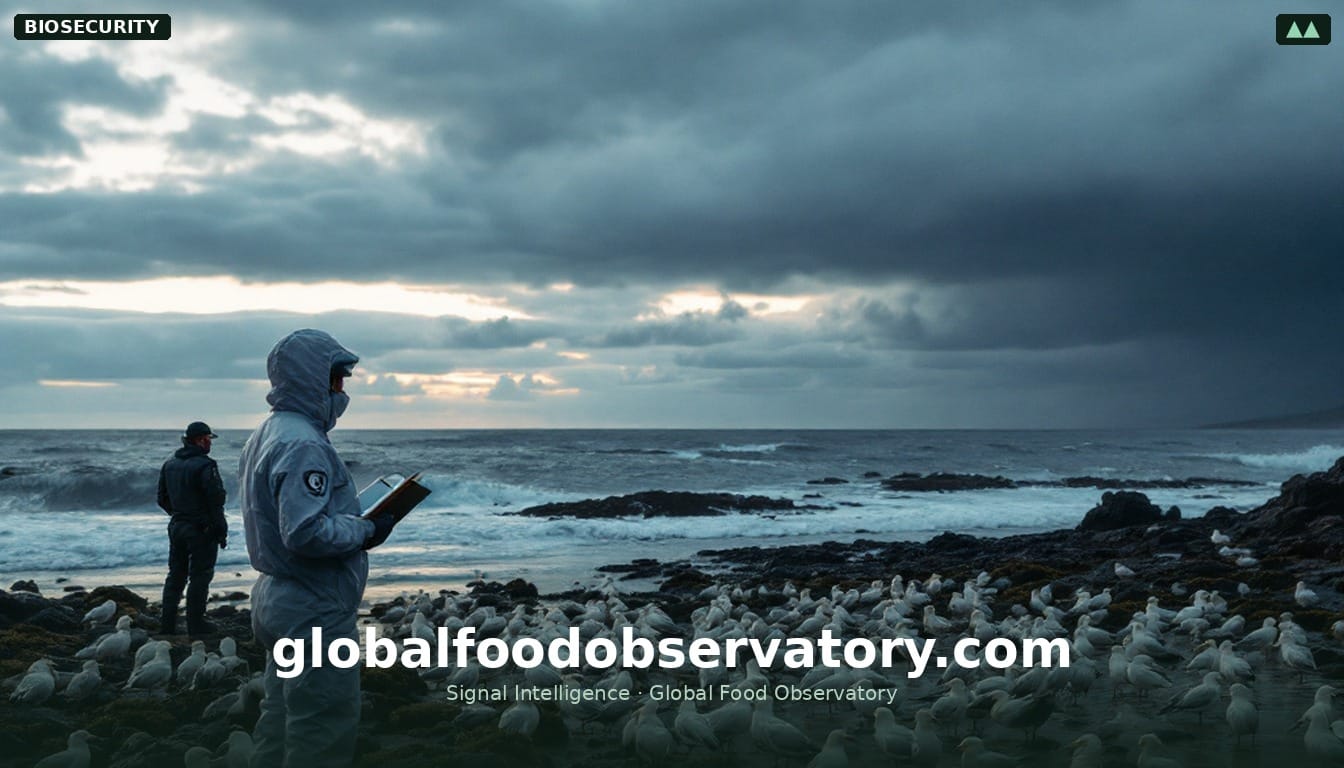
On 20 June 2026, the World Organisation for Animal Health was notified of Australia's first detection of high pathogenicity avian influenza H5N1, in a migratory brown skua, confirmed as the clade 2.3.4.4b lineage circulating globally. Australia had remained free of the strain through the panzootic that has crossed every other continent since 2021.
The detections have since multiplied. By 17 July, Australia had recorded seventeen confirmed H5 detections in wild seabirds, ten in Western Australia, five in South Australia and two in New South Wales, with no infection in poultry and no evidence of mass mortality. The event ends Australia's standing as the last H5 free continent.
The commercial position is intact for now. There are currently no trade restrictions on Australian poultry or poultry products, and the human health risk is assessed as low. Australia has invested heavily in surveillance and response capacity ahead of the incursion, and containment to wild birds so far reflects that preparation.
The context is a disease at record global intensity. WOAH's State of the World's Animal Health 2026 reports more than 2,000 HPAI outbreaks across 64 countries in 2025 to 2026, with over 140 million poultry lost or culled. Against that backdrop, the significance of the Australian incursion is not the current caseload but the closing of the last geographic gap: the strain is now present in a major exporter's wildlife, and the interval before it reaches commercial flocks is the variable that matters.
Implication
For poultry and egg importers, the practical exposure is contingency, not current disruption: Australia's export status is intact, but buyers reliant on Australian supply should have alternative origin arrangements mapped against the scenario of a commercial flock detection, which would trigger regionalisation and certification changes. For competing exporters, an Australian poultry incursion would open share in the same Asian and Middle Eastern markets Australia serves, an opportunity to scope now rather than react to later. For food companies with Southern Hemisphere sourcing, the closing of the last H5 free region removes the assumption that any major supplier is insulated from the panzootic, and argues for building avian influenza contingency into standing supplier risk frameworks rather than treating it as a Northern Hemisphere problem.
Decision Pathway
Sources
- WOAH, 20 June 2026
- WOAH, State of the World's Animal Health 2026
- Australia Department of Agriculture, Fisheries and Forestry, 17 July 2026
- Animal Health Australia, July 2026
Get AI-powered analysis of this signal — implications, risks, and procurement actions tailored to your exposure.