
Strait of Hormuz: One-third of global seaborne fertilizer trade severed at peak planting
Iran re-imposed shipping restrictions after US blockade of Iranian ports continues despite temporary ceasefire, with experts warning of "coming food crisis" from fertilizer starvation during Northern Hemisphere planting season.
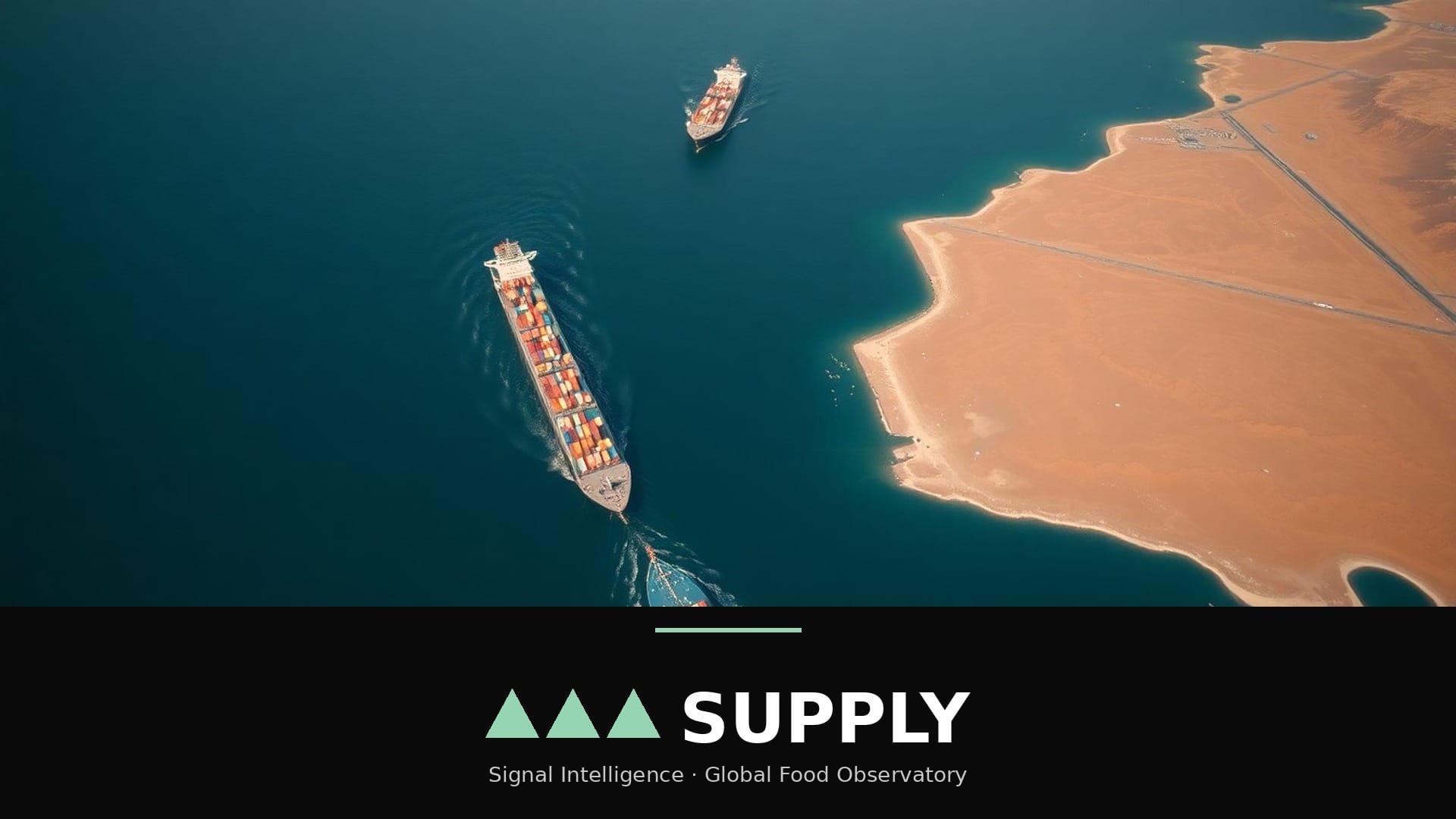
Iran re-imposed shipping restrictions after US blockade of Iranian ports continues despite temporary ceasefire, with experts warning of "coming food crisis" from fertilizer starvation during Northern Hemisphere planting season.
Signal Strength
▲▲▲ — This represents a structural shift with multi-quarter implications confirmed by two independent sources: Democracy Now agricultural analysis and Congressional Research Service conflict assessment. The escalation from regional disruption to active "dual blockade" creates permanent supply chain reconfiguration beyond seasonal disruption.
Signal
The Strait of Hormuz fertilizer crisis has escalated into a "dual blockade" that threatens to transform agricultural input markets permanently. After a brief ceasefire reopening on April 17, Iran re-imposed shipping restrictions this week following continued US blockade of Iranian ports, creating what one Emirati official described as access being "restricted, conditioned, and controlled."
The agricultural implications are immediate and severe. Democracy Now analysis published April 24 confirms that approximately one-third of global seaborne fertilizer trade transits the strait, with Middle Eastern producers supplying 40-50% of global urea exports. The timing coincides precisely with peak Northern Hemisphere planting season, when spring application of nitrogen fertilizer determines crop yields for autumn harvest.
Expert assessment warns of structural agricultural impact beyond logistics disruption. Adam Hanieh of SOAS Middle East Institute stated April 24 that the confluence of fertilizer shortage, debt crisis, and climate stress creates a "perfect storm" for global food security. The FAO warns of a maximum three-month window before "risks escalate significantly, affecting global planting decisions for 2026 and beyond."
The dual blockade fundamentally alters fertilizer logistics beyond war duration. Maritime insurance premiums have reached prohibitive levels, while alternative supply routes through Red Sea pipelines carry only oil, not ammonia products. Unlike oil markets with strategic reserves, fertilizer markets lack internationally coordinated stockpiles, making supply disruptions impossible to buffer through emergency releases.
Evidence
- Iran re-imposed strait restrictions after US port blockade continues despite April 17 ceasefire (Emirati official statement, April 9, reported April 24, 2026)
- One-third of global seaborne fertilizer trade transits Strait of Hormuz (Democracy Now analysis, April 24, 2026)
- FAO warns of three-month maximum window before risks escalate significantly (Foreign Policy analysis, April 2026)
- 40-50% of global urea trade originates from Middle East through Hormuz transit (War on the Rocks analysis, April 2026)
Implication
The dual blockade creates permanent reconfiguration of global fertilizer supply chains that will extend beyond conflict resolution. Input suppliers must accelerate alternative sourcing from non-Middle Eastern origins, accepting higher cost structures as the new baseline. Export agencies should prepare for yield reductions in 2026 harvest outcomes as farmers reduce fertilizer application rates due to cost and availability constraints. Food companies must secure forward commodity contracts before autumn harvest confirms yield impacts from reduced fertilizer application. Agricultural logistics providers should invest in alternative routing infrastructure as Middle Eastern transit becomes structurally unreliable for agricultural inputs.
Sources: Democracy Now, Foreign Policy, War on the Rocks, Emirati government
Get AI-powered analysis of this signal — implications, risks, and procurement actions tailored to your exposure.