
Britain loses bird-flu freedom as H5 reaches Washington dairy herds
H5N5 on the Isle of Lewis ended Great Britain's self-declared bird-flu freedom. USDA also confirmed H5 in two Washington dairy herds, the state's first livestock detections.

Price, trade, supply, biosecurity, regulation, climate — classified by strength, evidenced by source. Every signal GFO has published.
H5N5 on the Isle of Lewis ended Great Britain's self-declared bird-flu freedom. USDA also confirmed H5 in two Washington dairy herds, the state's first livestock detections.

USDA raised US corn yield to 181.2 bushels per acre and ending stocks by 282 million bushels. Most of the increase in world stocks is in the United States, while the EU crop forecast falls.

Skim milk powder gained 4.3% at GDT Event 413 while butter, milk fat and cheddar fell. USDA's October forecasts extend the divergence in protein and fat pricing into 2027.

USDA reports that Indonesia's halal authority does not plan a written extension. Exporters must check certification, registration and product exemptions before the 17 October deadline.

Brazil exhausted its China beef quota on 29 September, triggering an additional 55% duty from 1 October. Fourth-quarter redirection is a risk to monitor, not yet a measured flow.
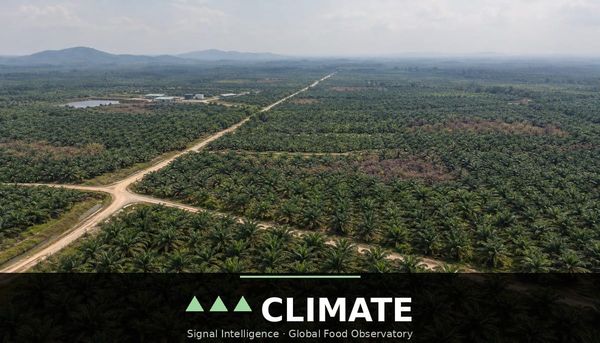
USDA cuts its 2026/27 Indonesian palm oil forecast to 45 million tonnes as NOAA confirms rainfall suppression. Forward supply risk is increasing, but the forecast is not a measured harvest loss.
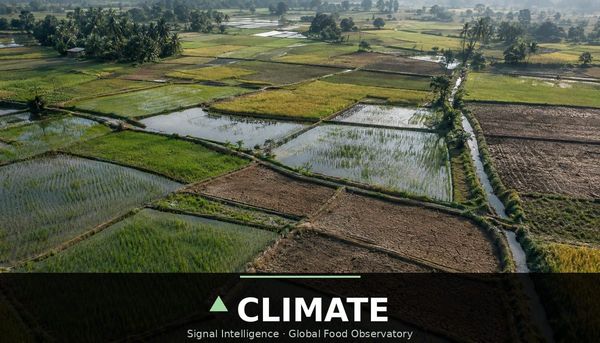
AMIS's historical analysis finds global rice yields typically 1.0–1.5% below trend in El Niño years. It is a framework for this season, not a confirmed forecast of losses.

Another 79 positive samples were reported across 11 farms in ||Kharas on 2 October. Cases remain confined to the region, but the widening outbreak complicates export recovery.
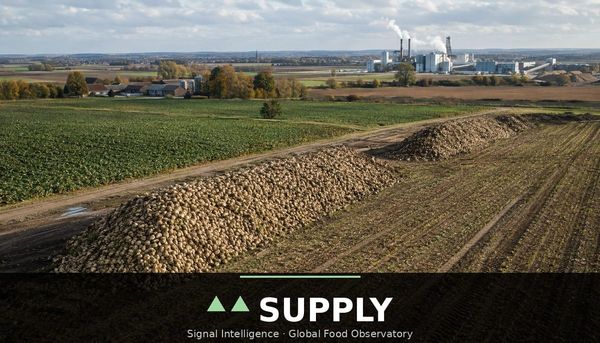
MARS forecasts EU beet yields 17% below last year, on top of reduced planted area. FAO's sugar index rose 6.1% in September, its third consecutive monthly gain.

FAO's maize measure rose 5.6% in September, while USDA put US corn stocks at 2.10 billion bushels. The divergence points to export logistics and origin risk, not just crop size.

The Council wants technical-zero import tolerances for particularly hazardous pesticides, including bee and groundwater risks. This is a negotiating mandate, not settled law.

SovEcon estimates put September Russian and Ukrainian wheat shipments at about 2.7 million tonnes, 60% below a year earlier. Alternative routes cannot replace the missing port capacity.

The Council wants technical-zero import tolerances for particularly hazardous pesticides, including bee and groundwater risks. This is a negotiating mandate, not settled law.

SovEcon estimates put September Russian and Ukrainian wheat shipments at about 2.7 million tonnes, 60% below a year earlier. Alternative routes cannot replace the missing port capacity.
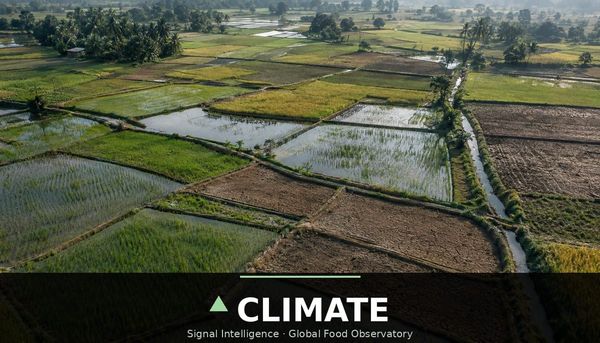
AMIS's historical analysis finds global rice yields typically 1.0–1.5% below trend in El Niño years. It is a framework for this season, not a confirmed forecast of losses.

Another 79 positive samples were reported across 11 farms in ||Kharas on 2 October. Cases remain confined to the region, but the widening outbreak complicates export recovery.
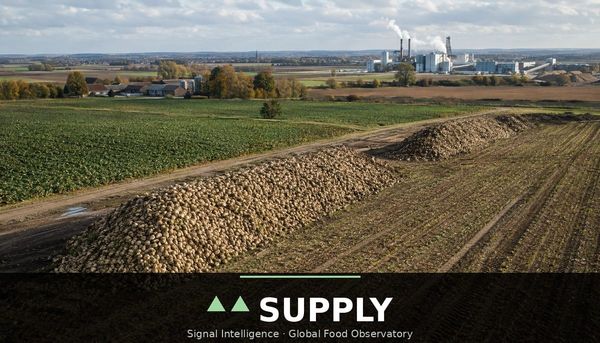
MARS forecasts EU beet yields 17% below last year, on top of reduced planted area. FAO's sugar index rose 6.1% in September, its third consecutive monthly gain.

FAO's maize measure rose 5.6% in September, while USDA put US corn stocks at 2.10 billion bushels. The divergence points to export logistics and origin risk, not just crop size.

USDA revised prior hog counts lower and put the September herd 1.5% below a year earlier. Winter farrowing intentions rose 2.1%, a possible turn that remains unconfirmed.

Malaysian palm oil stocks reached 2.82 million tonnes in August. Oil World's 2027 output cuts, relayed by MPOC, remain an early forecast rather than a confirmed supply decline.
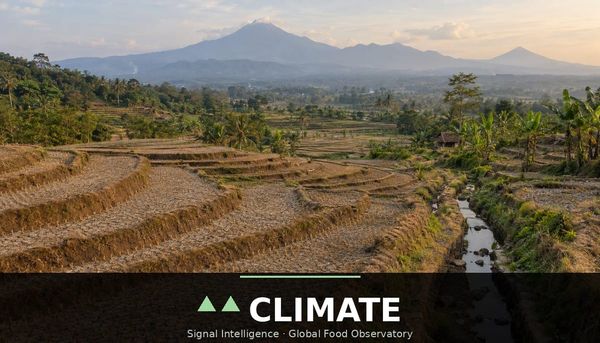
Indonesia's weather agency expects the rainy season to start later than usual across 61% of the country. The delay adds risk to the main rice planting window.

The EU's updated product list removes leather and sowing soybeans. Soluble coffee, some palm derivatives and frozen cattle tongues join the rule from December 2027.
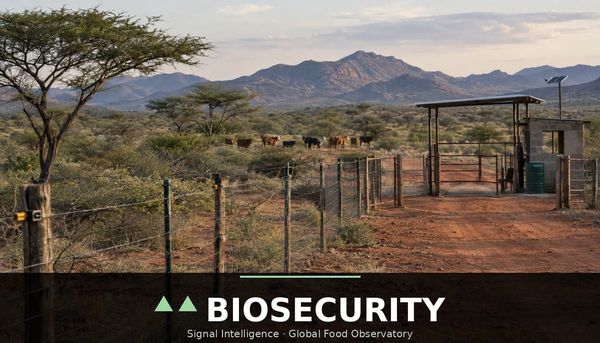
An outbreak inside Namibia's recognised disease-free zone has halted livestock movements and exports. A 26 September update counted 17 positive samples, all so far in Karasburg district.

Washington and Beijing extended their trade truce to 10 January. Their new tariff discussions include agriculture, but no additional farm purchases have been promised.

The autumn bird flu season has started in the US turkey belt. Since 1 September, APHIS has recorded seven H5N1 detections in commercial poultry across North Dakota, South Dakota, Minnesota and Idaho, the largest a turkey operation in McPherson…

Global Dairy Trade's price index fell 1.1% at Event 412 on 15 September, its first decline since early July. The composition matters more than the headline: butter fell 5.7% to $4,760 per tonne and anhydrous milk fat fell 3.0% to $5,739, while skim…

The EU's antimicrobial mirror measure is now working as a product-by-product gate. Brazil was removed from the list of countries authorised to export food-producing animals and animal products to the EU under Commission Implementing Regulation (EU)…
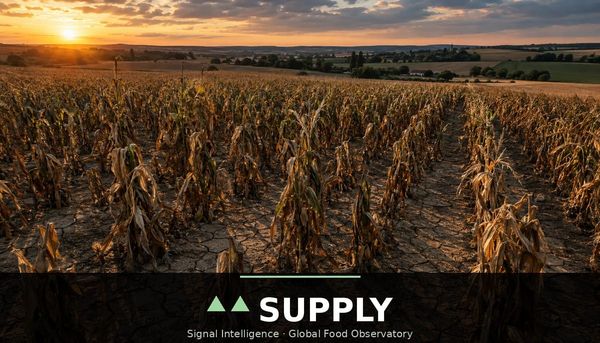
Europe's corn shortfall is larger than it looked in July. USDA's Foreign Agricultural Service puts EU corn production at 48.2 million tonnes for 2026/27, 4% below its July forecast and 15% below last season — the smallest EU crop of the century so…

The US-Canada dairy dispute has changed instrument. Canada answered the July Section 338 duties with counter-tariffs on C$27.6 billion (US$20 billion) of US goods on 8 September (Congressional Research Service, U.S. Tariffs on Canadian Imports…

Peru's El Niño commission has raised its forecast again. ENFEN's latest communiqué, issued on 14 September, says the coastal El Niño in the Niño 1+2 region is most likely to reach extraordinary magnitude between September 2026 and January 2027, and…

Uruguay's Ministry of Livestock, Agriculture and Fisheries declared a nationwide sanitary emergency on 4 September after confirming H5 highly pathogenic avian influenza in backyard poultry in Colonia department, in the country's southwest (MGAP…
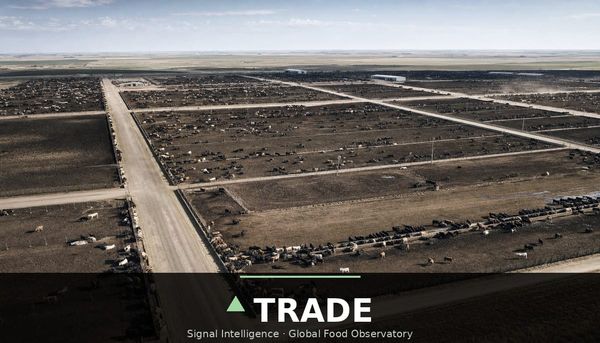
President Trump signed an executive order on 4 September directing the US Department of Agriculture, in consultation with the US Trade Representative, to review its authorities related to mandatory country-of-origin labelling for beef, through both…
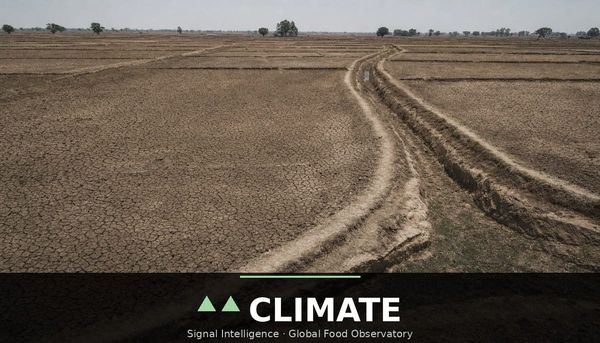
India's monsoon is on track for its weakest seasonal finish since 2009. The India Meteorological Department has confirmed a cumulative rainfall deficit running through August, with several independent tallies putting the shortfall in the 13–16%…

The GDT Price Index rose 0.9% at Global Dairy Trade's Event 411 on 1 September, its fourth consecutive gain, but the composition of that increase is the more significant reading than the headline number. Skim milk powder rose 5.3% to $3,695 per…

USDA's September WASDE, released 11 September, cut the US corn yield forecast to 178.5 bushels per acre from August's 180.7, trimming projected production to 15.8 billion bushels (USDA, World Agricultural Supply and Demand Estimates, WASDE-675, 11…

US Customs and Border Protection begins enforcing a new accuracy standard for importer-of-record data on 18 September, and any Form 5106 record CBP determines to be inaccurate or incomplete will be immediately voided — rendering the importer number…

India's Ministry of Finance issued Notification No. 30/2026-Customs on 21 August, exempting up to 10 lakh metric tonnes (1 million tonnes) of raw sugar under tariff heading 1701 from the whole of the customs duty otherwise leviable under the Customs…

The 2026/27 US soybean marketing year opened 1 September, and USDA export sales data show China purchases running in the low hundreds of thousands of metric tons in the season's opening days — 192,000 MT and 202,000 MT confirmed in separate reports…
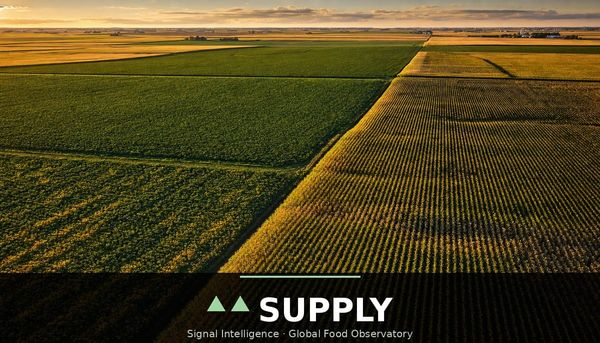
USDA's Crop Progress report for the week ending 30 August rated corn at 57% good-to-excellent, steady week-on-week but 12 percentage points below last year's 69%, with 17% of the crop rated very poor to poor — 8 points above the prior year's 9%…

The Swine Health Information Center and University of Minnesota's Global Swine Disease Monitoring Report for September, covering 30 July to 26 August, recorded 154 ASF outbreaks in domestic pigs reported to EU ADIS across nine European countries —…

The FAO Food Price Index averaged 133.3 points in August, up 1.9% from a revised July level and 2.5% year-on-year — its highest reading since late 2022 (FAO, Supply concerns drive Food Price Index higher, 4 September 2026). FAO Chief Economist…
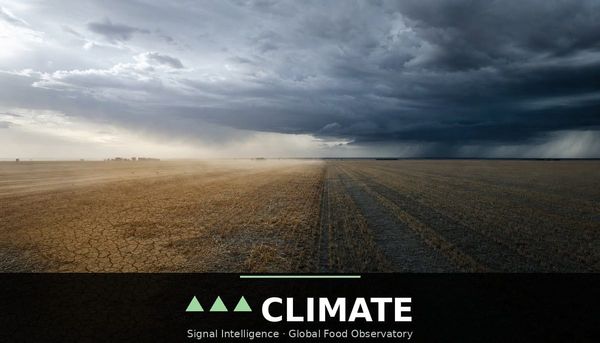
The World Meteorological Organization said on 3 September that El Niño will almost certainly persist through February 2027 and is forecast to strengthen to very strong intensity before peaking late this year — language WMO itself characterised as…
The Grain Industry Association of Western Australia cut its 2026 production estimates for the state's wheat crop by half a million tonnes to 9 million tonnes, and for barley by nearly a million tonnes to 6.1 million tonnes, in its August crop report…

Regulation (EU) 2025/40, the Packaging and Packaging Waste Regulation, entered into force in February 2025, but its PFAS restriction on food-contact packaging became mandatory on 12 August 2026. The concentration limits are strict by global…

USDA reopened the Douglas, Arizona port to cattle imports from Mexico on 24 August, guided by a science-based import protocol jointly agreed between the two countries (USDA APHIS, Screwworm.gov, 24 August 2026). This marks the first port in what…

Cocoa futures rose to $6,634.61 per tonne on 28 August, up 7.48% on the day and 27.96% over the trailing month (Trading Economics, 28 August 2026). The move follows a run of gains rather than a single-headline spike: December ICE New York cocoa…

Malaysia's palm oil inventories rose 3.32% month-on-month to 2.63 million tonnes in July, the highest level since February, according to the Malaysian Palm Oil Board's monthly release (MPOB, 10 August 2026; The Star, 10 August 2026). The build was…

Ukrainian drone strikes have knocked all three major grain terminals at Novorossiysk offline, Russia's principal Black Sea export hub, compounding weeks of intensified attacks on shipping and port infrastructure on both sides of the conflict…

The Pacific signal is unambiguous and strengthening. The Bureau of Meteorology reported a relative Nino3.4 index of +2.20 degrees Celsius for the week ending 9 August 2026, well above its +0.80 degrees Celsius El Nino threshold and consistent with a…

The Finnish Food Authority detected African swine fever by PCR in the remains of three wild boar piglets at Vaalimaa in the municipality of Virolahti, near the Russian border, with confirmation on 31 July 2026 — the first detection in Finland's…

The GDT price index rose 2.3% at Event 410 on 18 August, the third consecutive increase and the largest single-event lift since March. The average winning price across all products was USD 3,873 per tonne, with 176 participating bidders and 130…
The International Grains Council reduced its 2026/27 forecast for total grains production by 6 million tonnes to 2,415 million in its 20 August Grain Market Report. Wheat was cut by 4 million tonnes to 817 million and corn by 1 million tonnes to…
Article 107 of Regulation (EU) 2019/6 has prohibited the use of antimicrobials for growth promotion or yield enhancement inside the European Union since it entered application. Commission Delegated Regulation (EU) 2023/905 extended the identical…

Three presidential proclamations signed on 20 July 2026 impose an additional 50% ad valorem duty on specified Canadian goods across motor vehicles, alcoholic beverages and dairy, each resting on Section 338 of the Tariff Act of 1930 (Office of the…

The Generally Recognized as Safe pathway has functioned since 1958 on a principle of self-determination: a company can conclude a substance is safe for its intended use and market it without telling the regulator. The FDA has now proposed to end…

Finland has been preparing for African swine fever for a decade. It arrived on 30 July. The Finnish Food Authority detected the ASF virus genome by PCR in the remains of three wild boar piglets found dead at Vaalimaa in the municipality of…

For three years the US cattle market has run on a single logic: the herd is contracting, supply is falling, price goes up. The August WASDE breaks that chain. USDA lowered its 2026 beef production forecast by 321 million pounds, attributing the cut…

The Climate Prediction Center has moved past the question of whether this event is strong and has begun quantifying whether it is unprecedented. The 13 August discussion carries a greater than 90% probability of a very strong El Nino during the…

Edition 23 recorded that the sharpest Black Sea logistics disruption since 2017 had moved price without moving physical demand. That finding no longer holds. The USDA Foreign Agricultural Service post in Kyiv cut its forecast for Ukrainian corn…
USDA's August Crop Production report is the moment each year when modelled yields are replaced by field data, and this year it delivered a result pointing in two directions at once. The national corn yield forecast fell to 180.7 bushels per acre…

The 50% palm biodiesel blend became mandatory on 1 July, but producers waited most of the month for volume allocations under a ministerial decree, implementation friction inside a policy that FAO now identifies as a direct driver of the highest vegetable oil prices since June 2022.

The Philippines has suspended live animal and fresh meat imports from seven Middle Eastern and European economies after FAO notification of foot and mouth serotype SAT1, turning an African origin serotype's spread into country level market closure by an Asian importer.

State owned firms booked more than 2.4 million tonnes of US soybeans in a single week ahead of an expected September summit, while commercial importers keep sourcing Brazilian beans, making the pledge a state procurement exercise rather than a return of commercial demand.

The FAO Food Price Index posted its highest July reading since January 2023, yet meat recorded its first monthly decline of 2026 and dairy sits a quarter below year earlier levels, meaning the headline number is measuring input and geopolitical cost rather than consumer pull.

Covrig, Green Pool, StoneX and Czarnikow have each moved the coming season from surplus toward deficit within eight weeks of one another, turning a single house call in June into a converged market view underpinned by a physical contraction in Brazil's cane crush.

Cumulative rainfall recovered to 1% above normal by the end of July, yet 42% of Indian districts recorded deficient rainfall, and the weather office now forecasts August and September below normal, keeping rice and sugar output exposed despite a headline that looks resolved.

US 2026/27 all wheat commitments stand at 6.92 million tonnes against 9.54 million a year earlier, with hard red winter down more than half, showing that the sharpest Black Sea logistics disruption since 2017 has moved price without moving physical demand toward the residual supplier.
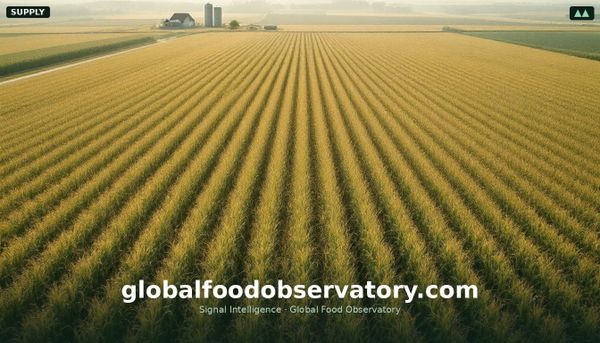
The corn crop rated good to excellent dropped to 63% in the week to 26 July, eleven points below a year earlier, while USDA's 16.0 billion bushel forecast still rests on a weather adjusted trend yield that will not meet survey data until 12 August.

Ghana's regulator has projected a decline of at least 16% in 2026/27 production while Cote d'Ivoire is also expected lower, sending London cocoa up 6.9% in a single session and reversing the demand led logic that had governed the market since grindings collapsed in the first quarter.

The Consultative Committee on Emergency Animal Diseases has confirmed that eradicating H5 in Australian wildlife is not technically feasible, converting a containment response into a permanent management regime for the last major poultry exporter to hold H5 free status.

New Section 301 duties of 10% to 12.5% took effect on 24 July across 60 economies covering almost all US imports, replacing the expired Section 122 surcharge and turning agricultural protection into a discretionary product listing rather than a structural carve out.

European grain output is now forecast more than 9% below last year with corn heading for a 19 year low, a shortfall in which weather and input cost driven area loss are separately material and additive.

The GDT index rose 1.5% on 21 July after three consecutive declines, yet cheddar and butter fell while every powder line gained, a composition that argues against reading the reversal as a return of broad buying interest.

The Wheat Quality Council's final North Dakota estimate of 48 bushels an acre sits well under USDA's state figure, removing the assumption that spring wheat would offset the smallest hard red winter crop in decades.
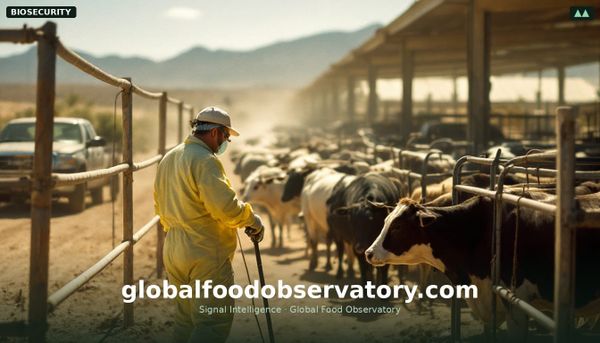
A suspension in place since May 2025 will unwind in phases from 24 August, an explicit decision to accept residual biosecurity risk in exchange for supply relief against record domestic beef prices.

Three proclamations under Section 338 of the Tariff Act of 1930 impose 50% duties on listed Canadian dairy and alcohol from 19 August, override USMCA originating status, and establish that granting a third country better quota access than the US is itself an actionable offence.

Sustained attacks on ports and shipping on both sides of the Black Sea have cut Russia's July wheat exports by a quarter and pushed Chicago wheat to a two year high, converting a war into a persistent origination and freight risk.

The EU is finalising a regulation cutting maximum residue levels for three widely used non EU fungicides to the limit of detection on every product, converting a food safety standard into a hard import condition.

Washington's 25% tariff on Brazil is the first application of a new Section 301 strategy that spares most food but tariffs sugar and ethanol, and signals a mechanism that could be turned on other major food exporting origins.

The panzootic strain of avian influenza has established in Australian wildlife for the first time, ending the country's status as the world's last H5 free continent even as poultry and trade remain, for now, untouched.

A record early summer heat dome and persistent drought have pushed forecasters to cut the EU grain crop and lift its corn import need toward a drought year record, turning a weather event into a trade consequence.

The International Grains Council's July balance sheet shows production and ending stocks contracting together while its price index climbs 7%, ending the multi year run of accumulating global buffers.

Arabica has recovered roughly a third of its value in a month even as the supply forecast points to a record Brazilian crop, showing weather risk not fundamentals is setting the price.

Cumulative rainfall stood about 20% below the long period average in early July and kharif sowing is running behind last year, while NOAA now puts a 97% probability on El Nino persisting into early 2027.

Regulation (EU) 2024/3190's eighteen month transition ends on 20 July 2026, after which non compliant food contact articles cannot be placed on the EU market, a packaging rule that functions as an import barrier for exporters of any origin.
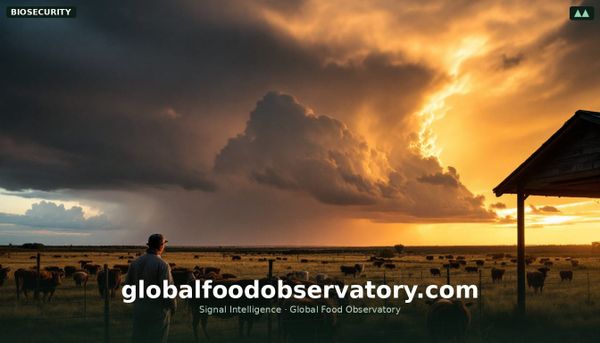
New World screwworm has moved from a single Texas detection to sixteen domestically acquired US cases and a formal CDC emergency activation, while the regional caseload has passed 185,000 animals.

Beijing's export restrictions now cover the large majority of Chinese fertiliser trade and are unlikely to lift before August, pushing the input cost consequence into 2027 planting decisions rather than 2026 ones.

The July WASDE confirms the smallest US wheat crop since 1970, yet a large Black Sea harvest is absorbing the shortfall, decoupling US production collapse from global price response.

The GDT index fell 4.9% on 7 July, a third consecutive decline, but the driver is supply expansion rather than demand collapse, which changes the shape of the second half price path.

NOAA's late-June ENSO update confirms a strengthening El Niño, but the more consequential new development is a positive Indian Ocean Dipole now projected to build alongside it through the second half of 2026.
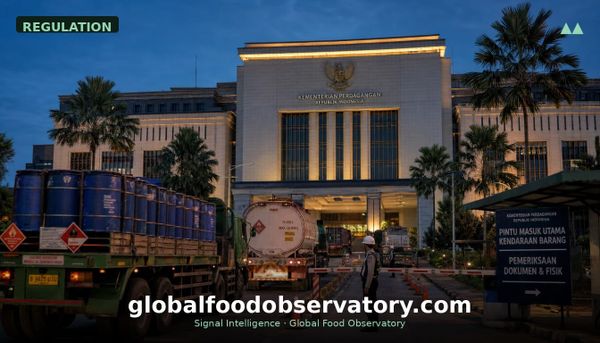
Indonesia's Ministry of Trade issued Regulation 16/2026 in early June, converting the state's planned palm oil export takeover from presidential announcement into binding rule as the transition period begins.

Sri Lanka's government has classified all nine provinces as African swine fever risk zones as the disease's toll climbs past 67,000 pigs and wild boar and 1,594 affected farms.

Beijing and Washington announced agreement in principle on an agricultural tariff-reduction framework, even as China's actual 2026/27 soybean purchases sit at 200,000 tonnes against a 25-million-tonne annual commitment.

FAO's Vegetable Oil Price Index rose 3.8% in June to its highest reading in years, diverging sharply from a broader Food Price Index that edged down for the first time in months.
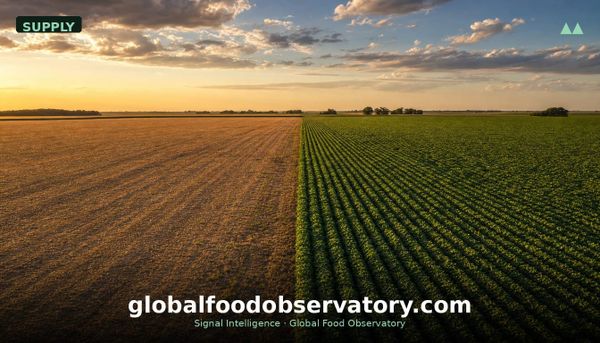
USDA's June 30 Acreage report locks in the lowest US all-wheat planted area on record while soybean plantings jump above trade expectations, cementing a structural reallocation of US row-crop land.

Lumpy Skin Disease has been confirmed in Western Europe for the first time, with outbreaks reported in northern Italy. The virus has tracked steadily westward from the Balkans since 2015 and the EU vaccine bank has insufficient SAT1-compatible doses to cover exposed cattle populations.
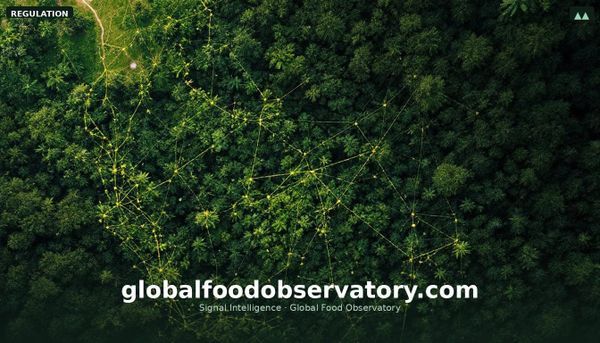
The EU Deforestation Regulation enters its final six-month compliance window with the December 30, 2026 deadline confirmed and non-negotiable. The EUDR Information System has relaunched with updated due diligence statement functionality, removing the last technical barrier to large-operator reg

Global rice trade is tightening structurally as El Niño bears down on the world's three largest exporters simultaneously. India's monsoon deficit is tracking the 2023 pattern that triggered export bans removing 20–25 million tonnes from global supply.

European wheat farm-gate prices are running 31% above the same point in 2025. The rally has now extended four consecutive months — driven by Russian area contraction, Ukraine drought, and El Niño forward expectations — pushing feed and milling cost curves materially higher.

India's Ministry of Agriculture has activated drought contingency plans for 150–200 districts as the kharif sowing season opens under El Niño. The 2023 playbook — rice and sugar export restrictions — is the base-case policy response if monsoon deficits exceed 10% nationally.